Breaking Down the Office: A Smarter Way to Disassemble Cubicles and Workstations
An office full of cubicles can look deceptively simple before a relocation begins. Once the workstations need to move, however, dozens of connected panels, desks, privacy screens, cable channels, shelves, power components, and fasteners can turn one room into a surprisingly detailed project.
Professional movers approach workstation disassembly as a planned operation rather than a last-minute packing task. Companies arranging office relocations can use https://hawaiimovingservices.com/commercial-moving/ as part of their planning process when coordinating furniture, equipment, and workplace logistics.
Mapping the Workspace Before Anything Is Removed
The first useful step is understanding how the existing office is configured. A workstation may consist of several panels connected to neighboring desks, while electrical and data cables can run through shared channels.
Experienced hawaii moving services can begin by documenting the layout before disassembly starts. Photographs, floor plans, and workstation labels create a reference that helps the moving team understand which components belong together.
Creating a Workstation Identification System
A simple labeling system can save considerable time later. Each workstation can receive a unique identifier, while individual panels, shelves, desktops, and hardware bags are marked with the same code.
For example, components from “Desk Area B12” should remain together instead of being mixed with visually similar pieces from another section of the office.
Disconnecting Technology Before Furniture
Modern workstations often contain much more than furniture. Monitors, docking stations, phones, computers, power strips, and network cables may be integrated into the setup.
Technology should be disconnected according to the company’s IT procedures before furniture disassembly begins. Cables can be labeled according to their workstation or device, while sensitive equipment should be packed separately.
Keeping Cables From Becoming a Tangle
Loose cables are easy to mix up when several employees have nearly identical setups. Labeling both ends of a cable or using workstation-specific bags can simplify reconnection.
A professional moving crew can coordinate with the company’s IT staff so that furniture and technology are handled in the correct sequence.
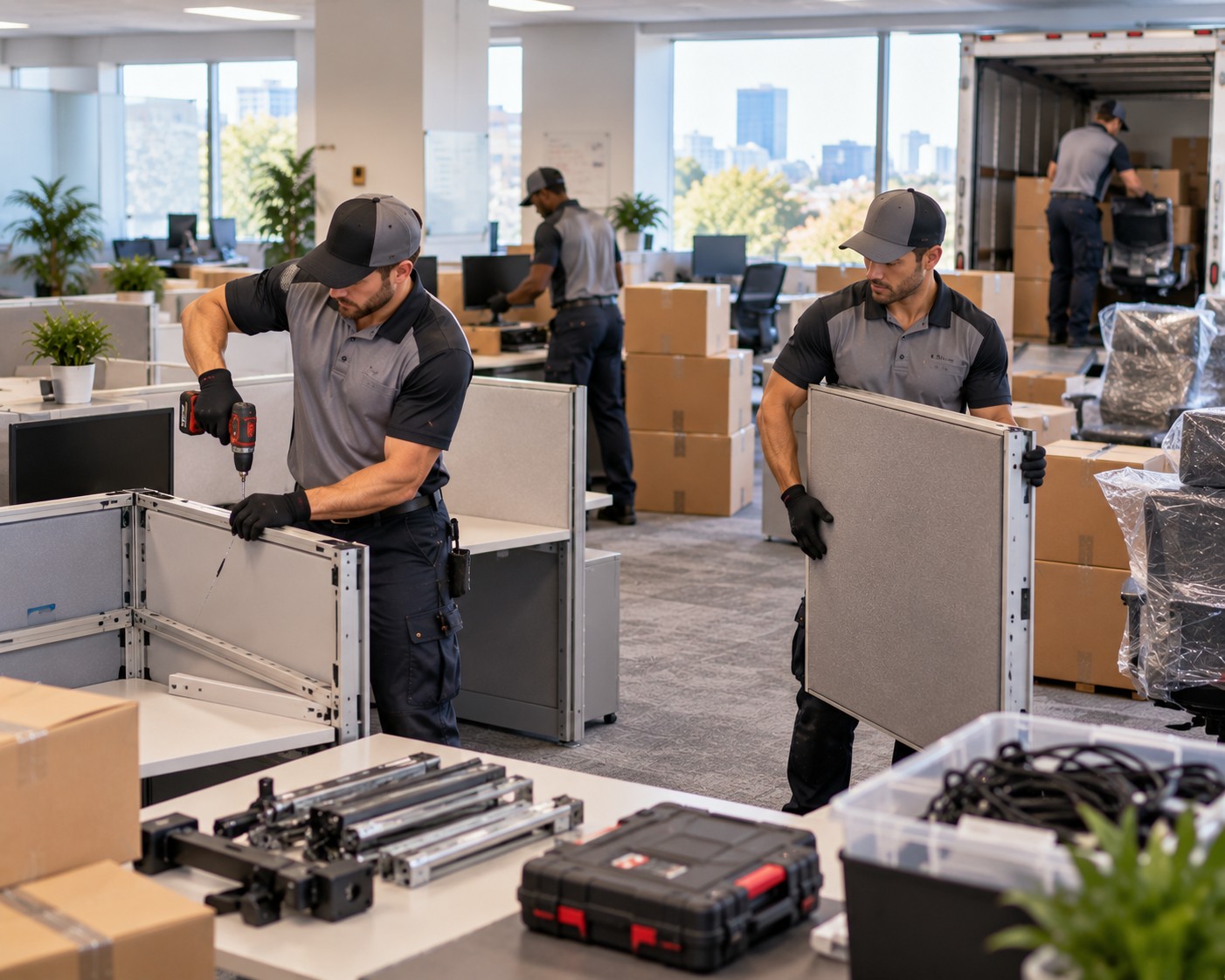
Taking Apart the Cubicle Structure
Cubicle systems vary by manufacturer and design. Some use clips, brackets, screws, rails, or specialized connectors. Movers should avoid forcing panels apart because a connection that looks simple may contain hidden hardware.
Panels can be separated systematically, with fasteners collected immediately rather than placed into a general hardware box.
Hawaii commercial moving projects can benefit from this approach because components may spend time in staging areas or transportation vehicles before reaching the new office.
Protecting Panels During Handling
Disassembled panels still need protection. Edges can chip when they strike door frames, and finished surfaces may become scratched if panels are stacked without padding.
Furniture blankets, corner protection, and suitable wrapping can help shield components during movement through hallways, elevators, and loading areas.
Handling Desks, Shelves, and Accessories
Cubicle workstations frequently include keyboard trays, overhead bins, pedestals, shelves, monitor arms, and other accessories. These smaller parts are easy to overlook.
Each accessory should be associated with its original workstation whenever possible. Hardware bags can be attached to larger components or placed inside clearly marked containers.
The goal is to prevent a common relocation problem: having all the major pieces at the destination but discovering that a small bracket or connector is missing.
Building an Efficient Loading Sequence
Once the workstations have been dismantled, the components need to leave the office in an organized order. Large panels should be protected from heavy objects, while smaller hardware should remain consolidated.
The loading sequence can also be influenced by the destination. If particular departments need to be operational first, their workstation components can be identified for priority handling.
Making Reassembly Easier at the New Office
The work does not end when the final panel leaves the old building. At the destination, the original documentation becomes the blueprint for rebuilding the workspace.
Floor plans can show where workstation groups belong, while labels identify individual components. Hardware organized by workstation reduces assembly delays, and photographs can help recreate configurations accurately.
Hawaii moving services can support this process by keeping disassembled furniture organized throughout handling rather than treating each panel as an independent item.
A well-planned cubicle move transforms a potentially chaotic task into a repeatable sequence: document the layout, disconnect technology, label components, disassemble carefully, protect every part, and rebuild according to the original plan. That preparation allows employees to return to a functional workplace without spending unnecessary time searching for the pieces that make each workstation complete.











Post Comment