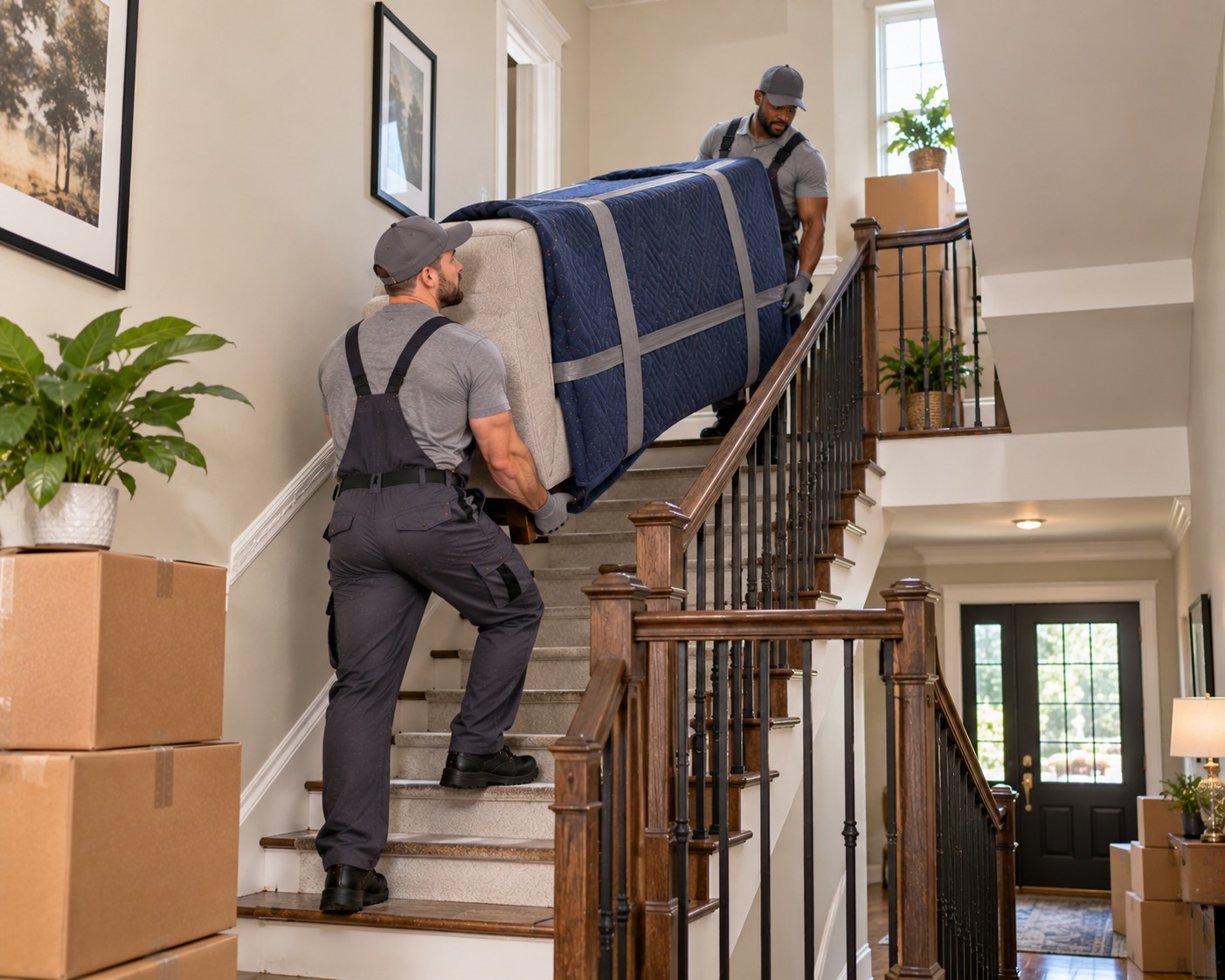
Moving a Multi-Level Greensboro Home Without Losing Momentum on the Stairs
Moving out of a multi-level home is rarely a simple matter of carrying boxes downstairs. When a property has several staircases and intermediate landings, every large piece of furniture requires careful maneuvering. Sofas must be angled around corners, wardrobes need sufficient overhead clearance, and even seemingly simple boxes can become awkward when several flights are involved.
For homeowners preparing a Greensboro relocation, the staircase should be treated as a central part of the moving strategy. Although Wilmington may have a very different residential environment, the experience of Movers in Wilmington also highlights an important principle: complex access conditions need to be considered before moving day rather than discovered during loading.
Homeowners can review https://milestonerelocation.com/greensboro when planning professional moving assistance and discussing the access requirements of a multi-level property.
Map Every Stairway Before Packing
Begin by walking through the house from the uppermost rooms to the exterior entrance. Identify every staircase, landing, narrow corridor, doorway, and transition point along the route.
Measure the width of each staircase and landing. Ceiling height is equally important, particularly where a tall wardrobe, bookcase, or mattress needs to be tilted. A piece may fit perfectly on a straight flight but become difficult to rotate when the staircase changes direction.
Create a list of furniture that presents the greatest challenge. Large sofas, armchairs, bed frames, dressers, cabinets, dining tables, and oversized mattresses should be assessed before smaller belongings are packed.
Check the Landing Geometry
Landings are often the most complicated areas because they require furniture to change direction. Measure the available turning space and identify railings, light fixtures, doors, and wall projections that could interfere with the maneuver.
If a piece cannot safely make the turn, consider whether detachable legs, doors, shelves, or drawers can be removed. Keep all hardware labeled and stored with the correct item.
Protect Stairs, Landings, and Walls
Repeated foot traffic can quickly bring dirt and debris onto staircases. Small particles beneath equipment or furniture can scratch wood, damage finishes, or leave marks on painted surfaces.
Use secure protective coverings on stairs and landings where appropriate. Make sure they remain flat and cannot slide beneath someone’s feet.
Walls and corners deserve similar attention. Large furniture often has to swing close to drywall while navigating a landing. Corner protection can reduce the chance of accidental marks.
Experienced Movers in Wilmington routinely encounter different types of access challenges, and the same general preparation principles apply to complicated stair layouts anywhere in North Carolina: clear the route, protect vulnerable surfaces, and establish a controlled carrying sequence.
Prepare Large Furniture for the Stairs
Do not attempt to move heavy furniture in its most cumbersome configuration simply because it is already assembled. If the manufacturer or construction permits safe disassembly, removing legs, shelves, doors, or drawers can significantly improve maneuverability.
Take photographs before disassembly, particularly when several pieces of hardware look similar. Place screws and fittings in labeled bags rather than combining everything in one container.
For exceptionally heavy pieces, avoid improvising with household straps or equipment. The weight distribution of furniture changes dramatically when it is tilted on a staircase, making controlled handling essential.
Keep Communication Simple
When several people are carrying a large object, one person should coordinate the movement. Clear instructions such as “lift,” “hold,” “turn,” and “stop” reduce confusion when visibility is limited.
Never rush around a landing simply because another room is waiting to be cleared. A controlled pause is safer than trying to complete a difficult turn too quickly.
Organize the Loading Sequence
The order in which belongings leave the house matters. Bulky furniture should generally move while stairways and landings are completely clear. Smaller boxes can be handled afterward.
If multiple rooms use the same staircase, avoid having several people attempt to carry items through the narrowest point simultaneously. Establish a simple traffic pattern so that everyone knows when the route is available.
Keep essential documents, valuables, medication, chargers, and other personal necessities separate from the main shipment. They should not have to travel repeatedly through a complicated stair route.
Prepare the Destination Before Unloading
A difficult staircase at the new home deserves the same attention as the one at the old property. Measure the destination route before moving day and determine where large furniture will ultimately be placed.
Clear landings, remove decorative objects, and protect floors before the truck arrives. If a large item requires an alternative entrance or specialized equipment, make that decision in advance.
Movers in Wilmington may work with coastal homes, apartments, and other properties where access varies significantly, while Greensboro homes can present their own challenges. In either situation, advance planning makes unusual layouts much easier to manage.
With accurate measurements, protected surfaces, organized sequencing, and careful communication, a home with multiple stair landings can be relocated without turning every staircase into a separate obstacle.












Post Comment