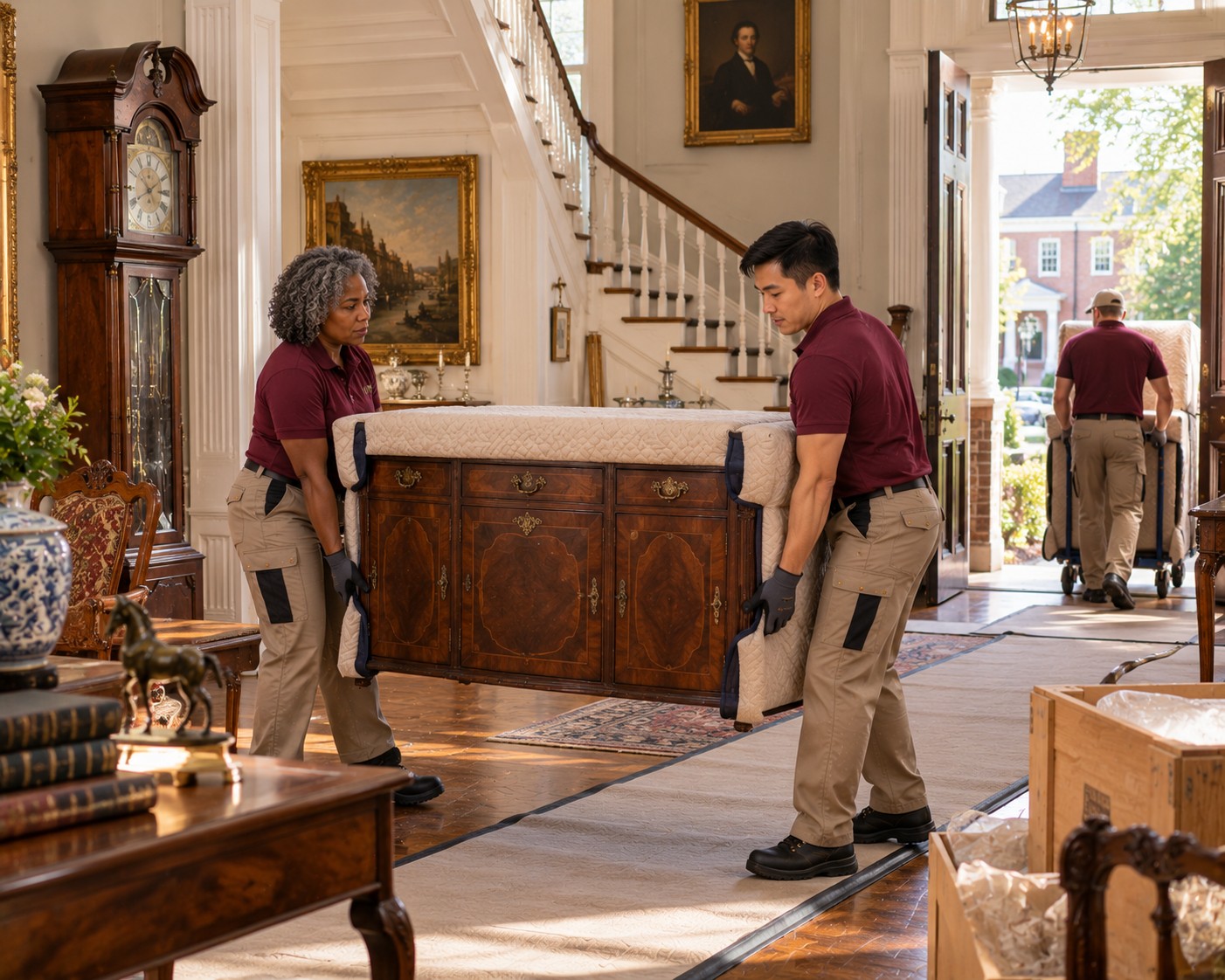
Preserving the Past: A Careful Moving Plan for Historic Estate Furniture in Williamsburg
Moving furniture from a historic Williamsburg estate is not simply a matter of transporting heavy objects from one address to another. Antique desks, carved cabinets, period dining tables, upholstered chairs, grandfather clocks, mirrors, and decorative pieces can carry both significant financial and sentimental value. Their age may also make them more vulnerable to vibration, impact, humidity, and careless handling.
For homeowners preparing such a relocation, the objective is to create a controlled process in which every important piece is documented, protected, moved through the property safely, and delivered according to a predetermined plan.
Begin With a Furniture Assessment
Before packing anything, walk through the estate and identify pieces that require special treatment. Record the approximate dimensions, material, condition, and location of each valuable item.
Large antique furniture can present access problems that are easy to overlook. A wardrobe may fit comfortably inside a room but be impossible to turn through a narrow hallway. A tall clock may require additional clearance, while a carved table could have fragile legs that should be removed before transportation.
Taking photographs before preparation creates a useful condition record. It can also help the moving team understand what each item looks like before wrapping and disassembly.
Homeowners should also Calculate moving costs early by considering the number of pieces, required packing materials, distance, access conditions, and any specialized handling that may be necessary.
Identify Pieces That Cannot Be Treated Normally
Not every antique should be moved using the same method. Veneered surfaces, delicate finishes, glass inserts, marquetry, carved details, and aged hardware can require additional protection.
Professional movers should know which items are especially vulnerable before loading begins. This allows the crew to determine whether furniture needs padding, custom crating, partial disassembly, or additional stabilization.
Protect the Estate During Removal
Historic properties can contain delicate architectural elements of their own. Hardwood floors, narrow staircases, decorative moldings, plaster walls, old doors, and banisters can all be vulnerable when oversized furniture passes through the building.
The route should be inspected before moving day. Measure doorways and stairwells, identify tight turns, and determine where furniture can be temporarily staged. Protective floor coverings and padded barriers can help shield the property during removal.
A piece should never be dragged simply because the route is difficult. Controlled lifting and appropriate equipment reduce pressure on both the furniture and the historic structure.
Plan Transportation Around the Furniture
The inside of the moving vehicle should be organized according to the characteristics of the estate inventory. Heavy furniture needs secure positioning, while fragile pieces should have sufficient separation from other belongings.
Glass panels, mirrors, clocks, and decorative objects require particularly careful stabilization. Drawers, doors, and removable components should be secured separately where appropriate, with hardware labeled so everything can be reunited at the destination.
Owners can Calculate moving costs more accurately when these requirements are identified before the moving date rather than added unexpectedly during loading.
For households relocating elsewhere in the state, https://starvanlinesmovers.com/locations/virginia can also provide a starting point for exploring moving support throughout Virginia.
Keep an Inventory During Loading
Create a numbered or named inventory of the most valuable pieces. Record which truck or container each item enters and keep photographs alongside the documentation.
This is especially useful when an estate contains numerous similar chairs, tables, lamps, or decorative objects. Clear records make it easier to confirm that everything has arrived and belongs in the correct room.
Prepare the Destination Before Delivery
The new property should be ready before the antiques arrive. Measure entrances and interior routes at the destination just as carefully as those at the Williamsburg estate.
A room-by-room placement plan can prevent valuable furniture from being moved repeatedly. If a large cabinet belongs against a particular wall, confirm that the wall is accessible and that doors, windows, and electrical fixtures will not interfere with placement.
Once furniture is positioned, avoid immediately unpacking every decorative accessory. Establishing the major pieces first provides a stable foundation for arranging smaller objects afterward.
Historic estate furniture deserves a moving process built around preservation rather than speed alone. With careful assessment, documented condition, protective preparation, controlled access, and thoughtful delivery planning, Williamsburg homeowners can move significant furnishings while respecting both the pieces themselves and the historic character surrounding them.











Post Comment